

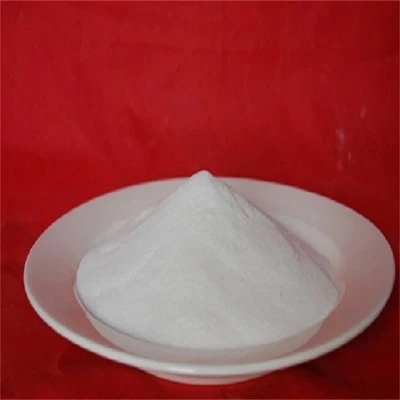
Piglet Nursery Palatability Enhancer: Advanced Feed Flavor & Sensory Solutions for Post-Weaning Diets
Transitioning from sow milk to solid feed is one of the most critical phases in swine production. Post-weaning stress, combined with the bitter or astringent taste of functional additives, often leads to delayed feed adoption, gut atrophy, and lost growth momentum.
Key Technical & Functional Characteristics
Science-Backed Sensory Attraction
Young piglets possess a highly developed sense of taste and smell, with over 15,000 taste buds. Our formulation leverages precise volatile aromatic compounds and non-volatile gustatory enhancers that simulate the familiarity of sow milk while stimulating digestive enzyme secretion and appetite signals.
Thermal & Processing Stability (Pelleting Resistance)
Modern nursery feed production involves conditioning, expanding, or pelleting. Unlike conventional flavors that evaporate under heat, our product utilizes advanced carrier technology and heat-stable aromatic encapsulation:
Pelleting Resistance: Maintains volatile aroma integrity under conditioning temperatures up to 85°C to 90°C.
Storage Stability: Minimal loss of sensory potency over a 12-month shelf life when stored in original sealed packaging.
Physical Handling & Automated Dosing Characteristics
Designed for modern automated feed mills, the product features physical properties optimized for seamless micro-dosing and uniform dispersion:
Flowability: Non-caking, free-flowing powder structure to prevent bridging in micro-bins.
Bulk Density & Particle Size: Matched with standard premix carriers to prevent segregation during pneumatic conveyancing and mixing.
Dispersibility: High Coefficient of Variation (CV) uniformity (< 5%) achieved within standard batch mixing cycles (90 to 120 seconds).
Application & Formulation Guide
|
Feed Application |
Target Sensory Objective |
Key Formulation Challenges |
Recommended Focus Parameters |
|
Creep Feed (Pre-weaning) |
Encourage early solid feed exploration |
Low intake, milk-to-solid transition |
Milky/sweet profile, high volatility, low threshold attraction |
|
Nursery / Starter Feed |
Maintain ADFI, prevent growth lag |
Diet transition, high zinc/copper levels |
Masking capability, heat stability, inclusion accuracy |
|
Post-Weaning Diets |
Support gut health, substitute costly ingredients |
Ingredient changes (e.g., adding DDGS/rapeseed meal) |
Bitter masking, cost-effective inclusion, feed acceptance |
|
Concentrates & Premixes |
Ensure carrier stability and dosing consistency |
High active concentration, potential oxidation |
Non-hygroscopic carrier, storage stability, zero interactions |
Technical Specifications
|
Parameter |
Specification / Details |
Test Method / Reference |
|
Product Name |
Piglet Nursery Palatability Enhancer |
Technical Grade |
|
Product Form |
Free-flowing Powder (Liquid grades available upon request) |
Visual / Physical Inspection |
|
Appearance & Color |
Off-white to light beige powder |
Internal Standard |
|
Odor & Taste Profile |
Characteristic Sweet, Milky, and Creamy Vanilla/Fruity notes |
Organoleptic Evaluation |
|
Active Carrier |
Food-grade Silica / Cereal-based carrier (Grade dependent) |
Formulation Sheet |
|
Moisture Content |
Less than or equal to 6.0% |
Loss on Drying (105°C, 3 hrs) |
|
Bulk Density |
0.50 - 0.70 g/cm³ |
ASTM D6683 |
|
Particle Size Passing |
Greater than 95% through 60 mesh (250 µm) |
Sieve Analysis |
|
Mixing Uniformity (CV) |
Less than 5.0% in complete feed matrix |
Methyl Violet / Micro-tracer Test |
|
Heavy Metals (as Pb) |
Less than or equal to 10 mg/kg |
ICP-MS |
|
Arsenic (As) |
Less than or equal to 2 mg/kg |
ICP-MS |
|
Microbiological Limits |
Total Plate Count < 10,000 CFU/g; Salmonella: Negative in 25g; E. coli: < 10 CFU/g |
ISO / AOAC Standards |
|
Shelf Life |
12 months from production date in unopened original packaging |
Real-time / Accelerated Stability |
|
Storage Conditions |
Store in a cool, dry, well-ventilated area away from direct sunlight |
Max 25°C, Relative Humidity < 60% |
Quality Assurance, Manufacturing Control & Traceability
Raw Material Integrity: Every lot of active aroma ingredients and carriers undergoes incoming inspection for purity, moisture, and sensory match against reference standards.
Computerized Automated Batching: Micro-dosing systems ensure precision weighing down to +/- 0.1% accuracy, eliminating human error in active ingredient blending.
Controlled Multi-Stage Mixing: Ribbon-and-paddle hybrid blenders ensure homogeneous distribution of liquid/active flavor complexes onto solid carriers.
Full Batch Traceability: Every commercial shipment is linked to a unique batch number, connecting raw material lots, in-process QC parameters, production logs, and retained samples (maintained for 18 months).
Regulatory Compliance & Export Documentation
Quality Certifications: FAMI-QS, ISO 22000:2018, ISO 9001, GMP+ certified facility.
Regulatory Compliance: Compliant with European Feed Additive Legislation (EC No 1831/2003), US FDA 21 CFR, and regional feed regulations across LATAM, APAC, and EMEA.
Standard Documentation Package Provided: Technical Data Sheet (TDS), Certificate of Analysis (COA) per batch, Safety Data Sheet (SDS) compliant with GHS, Statement of BSE/TSE-Free & Non-GMO status, Certificate of Origin, and Stability Test Summaries.
Packaging, Logistics & Customization Services
Packaging & Logistics
Standard B2B Packaging: 20 kg / 25 kg multi-wall kraft paper bags with moisture-proof PE inner liner.
Bulk Supply: 500 kg / 1,000 kg UV-protected Super Sacks (FIBC Jumbo Bags) with discharge spouts.
Palletization: Fumigated heat-treated wooden/plastic pallets, stretch-wrapped with corner boards for ocean freight protection.
Customization Services (OEM / Private Label)
Customized flavor profile adaptation (e.g., Roasted Sweet, Condensed Milk, Fruity-Vanilla).
Carrier substitution (e.g., Organic carriers, silica-free options, water-soluble grades).
Specialized concentration adjustments for low-inclusion premixes (100 g/ton up to 1,000 g/ton).
FAQ
Q: How does this palatability enhancer mask bitter or astringent ingredients in feed?
A: High levels of Zinc Oxide, free organic acids, or plant proteins introduce bitter or sour notes that reduce intake. Our product combines high-affinity taste-masking compounds with volatile aromatic signals that block bitter taste receptors and override negative gustatory cues, keeping feed intake consistent.
Q: Is the aroma retained after high-temperature conditioning and pelleting?
A: Yes. Active aromatic components are immobilized on micro-porous matrix carriers and protected with thermal-resistant coating technology. Tests confirm over 85% to 90% aroma retention after conditioning and pelleting at temperatures up to 85°C to 90°C.
Q: What is the recommended inclusion rate in nursery feed formulations?
A: The standard inclusion rate ranges between 200 g to 1,000 g per metric ton (0.02% to 0.1%) of complete feed, depending on baseline raw materials, processing conditions, and the target sensory profile.
Q: What compliance documentation do you provide for international vendor approval?
A: We supply a full B2B dossier, including Technical Data Sheets (TDS), batch-specific Certificates of Analysis (COA), GHS-compliant Safety Data Sheets (SDS), Non-GMO & BSE/TSE-Free statements, and facility certifications (FAMI-QS, ISO 22000, GMP+).
Q: How can we request sample quantities for laboratory testing and feed trials?
A: Evaluation samples (500 g to 2 kg) are available upon request. Simply contact our team with your target feed application, piglet production stage, destination market, and estimated annual demand.
Hot Tags: piglet nursery palatability enhancer, China piglet nursery palatability enhancer manufacturers, suppliers, factory