

Your Professional Feed Additive Supplier
We are a artificial sweeteners manufacturer. The company produces different types of sweeteners, sodium saccharin, anhydrous sodium saccharin, natural sweeteners, and compound sweeteners. The company adheres to the principle of serving customers, aiming to provide high-quality saccharin sodium, and upholds the development philosophy of "honest cooperation and pursuit of excellence". Create a new type of enterprise that caters to the sweetener market and meets the needs of a wide range of customers.
Why Choose Us
Our Factory
Our company is an innovative enterprise engaged in the production of food additive saccharin sodium. Which is in line with the production environment of food additives. And it has passed the qualification certification for saccharin sodium as a food additive in Jiangxi Province. It is one of the national food additive saccharin sodium production enterprises.
Advanced Equipment
Having advanced production, testing, and inspection equipment; Main testing equipment: UV spectrophotometer, pH meter, electronic balance, melting point meter, constant temperature drying oven, muffle furnace, ultrasonic cleaner, atomic absorption spectrometer, atomic fluorescence spectrometer and other instruments.
Products standards
Our products meet BP, USP and EP standards, and are certified with Kosher, Halal and ISO 22000:2018.
Rich Experience
To cater for customers' particular needs , we have established a R&D research team with a number of 15 experts, who has over ten years of experience in the development of sweeteners, providing customized solutions to over 300 customers.


Advantages of Feed Additive
Medicated
Some additives may contain antibiotics or other drugs that help livestock farmers to reduce the chances of their livestock becoming diseased, sick, and infected. It can also aid in growth and weight gain.
Minerals
Minerals play a pivotal role in the health of livestock and can improve weaning and conception rates, immune system response, and overall health. All of these benefits add up to a more valuable livestock investment.
Protein
Protein additives are especially popular in the cattle and beef industry. Blocks, tubs, and liquid forms of protein are all available to livestock farmers. It's not always necessary to add protein to a livestock diet, so it's a good idea to test and measure levels of protein intake before making a decision.
Pest Control
Pests are an ever-present nuisance for livestock farmers. They're hardy, they breed quickly, and they spread throughout feed within days. Some additives can help to stop the lifecycle of certain pests by eliminating favorable breeding conditions.
Comparing Feed Additive Blend
| Treatment | Class combination | Active component |
| Negative control | N/A | N/A |
| Presan-FY | Organic acids & plant extracts/phytogenics | Short and medium chain fatty acids, slow release C12, target release butyrates and phenolic compound |
| Blend 2 | Probiotics & prebiotics | Enterococcus faecium DSM 16211 (jejunum isolate), Bifidobacterium animalis DSM 16284 (ileum isolate), Lactobacillus salivarus DSM 16351 (caeca isolate) with mix ratio 3:1:6 (total cfu/g: 2x10⁸), plant-derived fructo-oligosaccharides from inulin. |
| Blend 3 | Organic acids & plant extracts/phytogenics | Benzoic acid (80-83%) and a blend of essential oils (including thymol 1.0-1.9%, eugenol 0.5-1.0%, and piperine 0.05-0.1%) |
| Blend 4 | Organic acids & plant extracts/phytogenics | Short- and medium-chain fatty acids (including monoglycerides of C3, C4, C8 and C10) and essential oils (mainly cinnamon aldehyde) |
| Blend 5 | Organic acids & plant extracts/phytogenics | Glycerol-esterified short and medium-chain fatty acids (including C3, C4, C8 and C10) and 6% phytogenics (including essential oils, saponins and bitter and pungent substances) |
| Blend 6 | 2 classes combined: a prebiotic and plant extracts | Saccharomyces cerevisiae cell wall extracts (including min .60% purified β-1,3/1,6 glucans); Oleoresins from turmeric (Curcuma longa) (4.4%) and chili peppers (genus Capsicum) (4.4%) |
| Blend 7 | 2 classes combined: Organic acids and prebiotics | Dehydrated Saccharomyces cerevisiae culture with whole cells, metabolites and medium nutrients (min. 15% crude proteins, min. 1.5% crude fat, max. 25% crude fibre, max. 9% ash); Diformate (derived from C1) (57% Na-formate, 39% formic acid) |
Vitamin A Raw Material
Vitamin A is a fat soluble vitamin, an organic compound with the chemical formula C20H30O. It is stable to heat, acid, and alkali, and is easily oxidized. Ultraviolet radiation can promote its oxidative damage.
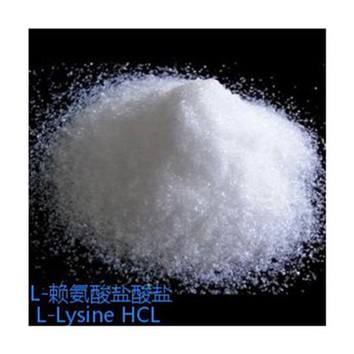
L-Lysine Monohydrochloride
L-lysine hydrochloride is a chemical substance with the molecular formula C6H15ClN2O2. Lysine is one of the most important amino acids, and the amino acid industry has become a significant industry with considerable scale and importance.
Vitamin Ad3 Powder
Vitamin AD3 powder is a feed additive composed of vitamin A and vitamin D3, mainly used to supplement the deficiency of vitamin A and D3 in animals, promote growth and development, enhance resistance, and improve egg production and hatching rates.
Monocalcium Phosphate Powder
Monocalcium phosphate powder is a white or off white crystalline or crystalline powder with a distinctive odor. It is an organic compound and one of the essential amino acids for the human body. Its molecular formula is C5H11O2NS, and it has optical activity.


Choline Chloride 60% Corn Cob
Choline chloride is an organic compound with the chemical formula C5H14ClNO. It is a white hygroscopic crystal, odorless, and has a fishy odor. This product is soluble in water and ethanol, but insoluble in ether, petroleum ether, benzene, and carbon disulfide.
Organic Soy Protein Concentrate
Organic soy protein concentrate is a soy protein product made from organic soybeans through processing techniques such as crushing, peeling, extraction, separation, washing, and drying.
Dicalcium Phosphate Powder
Calcium hydrogen phosphate is an inorganic compound with the chemical formula CaHPO4. It is a white crystalline powder that is easily soluble in dilute hydrochloric acid, dilute nitric acid, and acetic acid, slightly soluble in water, and insoluble in ethanol.
Vitamin B1 Powder
Vitamin B1, also known as thiamine or anti neurokinin, is synthesized by fungi, microorganisms, and plants, while animals and humans can only obtain it from food.
How to Ensure the Safety of Feed Additives
Firstly, the use of feed additives needs to be strictly controlled and managed. Governments and relevant departments need to introduce relevant regulations and standards to standardize the scope, amount, and method of adding feed additives, ensuring that their use in animal feed complies with laws and regulations.
Secondly, the safety assessment of feed additives needs to be strengthened. When developing new feed additives, rigorous safety assessments, including assessments of their toxicity, carcinogenicity, and allergenicity, are required. Only through rigorous scientific evaluation and experimental verification can the safety of new feed additives for animals be ensured.
In addition, it is necessary to raise the sense of responsibility of production enterprises and practitioners. When producing feed additives, production enterprises need to strictly follow relevant standards and regulations to ensure product quality and safety.
Furthermore, consumer supervision and participation need to be strengthened. When purchasing animal feed, consumers should choose formal channels to avoid buying products of poor quality. At the same time, consumers can monitor the feed additive market and protect their own and animals' rights and interests through reporting and complaining.
FAQ
As one of the leading feed additive manufacturers and suppliers in China, we warmly welcome you to buy high-grade feed additive for sale here from our factory. All our products are with high quality and competitive price.
L Lysine Monohydrochloride, feed additive, feed additive for game animals