

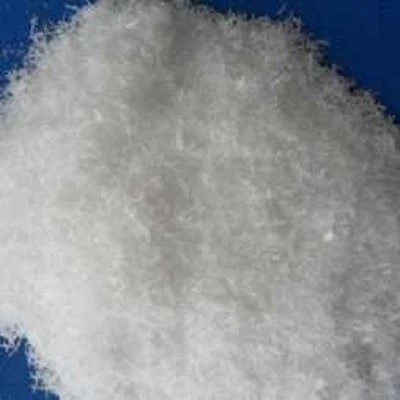
Nickel brightener chemical grade saccharin is a high-purity raw material engineered specifically for bright nickel electroplating formulations and additive systems.
In industrial electroplating, saccharin functions as a critical stress-reducing and leveling agent. It works synergistically within secondary brightener formulations to refine grain structure, increase ductility, and minimize internal tensile stress in nickel deposits, preventing blistering, cracking, and peeling.
Key Benefits for Industrial Buyers
Effective Stress and Ductility Control: Counteracts tensile stress induced by primary brighteners to ensure crack-free, ductile nickel coatings.
High Purity and Low Residue: Strictly controlled water-insoluble matter and low heavy-metal limits prevent plating bath contamination.
Batch-to-Batch Consistency: Manufactured under ISO 9001:2015 quality management systems for predictable formulation performance.
Global Regulatory Support: Accompanied by GHS-compliant Safety Data Sheets (SDS), lot-specific Certificates of Analysis (COA), and compliance support for EU REACH and RoHS.
Technical Specifications
|
Quality Parameter |
Standard Specification |
Testing Method / Standard |
|
Chemical Name |
Saccharin (Chemical Grade) |
CAS No. 81-07-2 |
|
Appearance |
White crystalline powder / granules |
Visual Inspection |
|
Assay (Dry Basis) |
>= 99.0% |
Acid-Base Titration / HPLC |
|
Melting Point |
226.0 deg C - 230.0 deg C |
Melting Point Apparatus |
|
Loss on Drying |
<= 0.5% |
Oven Drying (105 deg C) |
|
Heavy Metals (as Pb) |
<= 10 ppm |
Atomic Absorption (AAS) |
|
Arsenic (As) |
<= 2 ppm |
AFS / AAS |
|
Solubility in Water |
Clear and transparent solution |
Lab Dissolution Test |
|
Insoluble Matter |
<= 0.05% |
Gravimetric Method |
|
Quality System |
ISO 9001 Certified Production |
Lot-Traceable |
Key Electroplating Applications
Bright Nickel Plating Systems: Functions as a primary stress reducer and grain refiner to maintain flat, low-stress nickel layers in high-speed and decorative baths.
Decorative and Functional Surface Finishing: Enhances the ductility and bright throwing power of multi-layer nickel systems applied over steel, brass, zinc die-castings, or ABS plastics.
Plating Chemical Blending: Serves as an essential raw material for formulating liquid electroplating brighteners, maintenance additives, and proprietary stress-control chemical packages.
Quality Control and Traceability
Raw Material Inspection: Every incoming raw material batch is screened for purity before entry into production.
Synthesis and Purification: Multi-stage crystallization and purification ensure high chemical purity and minimal organic side-products.
Moisture Control: Monitored drying processes maintain consistent moisture levels, preventing caking and ensuring rapid dissolution during blending.
Finished Lot Testing: Every production lot is tested against standard technical parameters, including assay, heavy metal limits, and solubility.
Batch Traceability: Each shipment is assigned a distinct batch number linked directly to its production records and COA.
Packaging, Storage, and Supply Chain
Standard Packaging: 25 kg multi-wall paper bags or fiber drums with PE inner moisture-barrier liners.
Bulk Packaging: Flexible Intermediate Bulk Containers (FIBC / Jumbo Bags) available for high-volume supply.
Palletization: Export-standard pallets, fully stretch-wrapped and corner-protected.
Storage Requirements: Store in a cool, dry, well-ventilated area away from strong oxidizers and moisture.
FAQ
Q: What is the primary functional role of saccharin in bright nickel electroplating?
A: In bright nickel plating baths, saccharin serves primarily as a stress reducer and grain refiner. While primary brighteners increase brilliant shine, they often induce internal tensile stress that causes brittle coatings.
Q: Can chemical grade saccharin be dissolved directly into a plating bath?
A: While chemical grade saccharin can be added directly to plating baths after pre-dissolving in warm water or bath liquid, it is most commonly used as a raw material to formulate ready-to-use liquid nickel electroplating additives.
Q: How does impurity control impact nickel plating performance?
A: Uncontrolled heavy metal impurities (such as lead, copper, or iron) or insoluble matter in lower-grade chemicals can lead to dark plating in low-current density areas, rough deposits, and clogged bath filtration systems.
Q: Can buyers request lab samples and lot-specific COAs for supplier qualification?
A: Yes. Evaluation samples, representative or lot-specific Certificates of Analysis (COA), and SDS documentation can be provided for technical evaluation and vendor auditing.
Q: What information should be provided when requesting a commercial quotation?
A: Please provide your required product quantity, preferred packaging configuration, destination port or country, required compliance documentation, and any specific target parameters to receive an accurate quotation.
Hot Tags: nickel brightener chemical grade saccharin, China nickel brightener chemical grade saccharin manufacturers, suppliers, factory, coconut sugar, kal stevia powder, sweeteners for sweetening mustard, sweeteners for sweetening seasonings, sweeteners for sweetening sorbet, sweeteners for sweetening spring rolls