

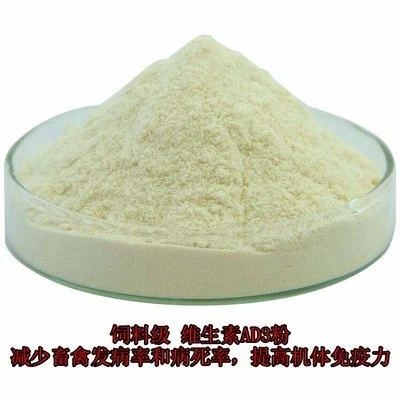
Lactating sow nutritional additive is a precision-engineered feed additive designed for sow diets during the lactation period. Available as single functional ingredients or formulated blends, it supports sow body condition, milk yield, and piglet weaning performance.
Engineered for commercial feed mills, premix manufacturers, and integrated swine producers, this product satisfies strict technical standards where formulation accuracy, batch consistency, physical handling, and compliance documentation are essential purchasing requirements.
Technical Specifications
|
Parameter |
Buyer Evaluation Requirement |
Technical Specification |
|
Product Name |
Lactating Sow Nutritional Additive |
Standard or Customized Formula |
|
Product Type |
Swine Feed Additive / Premix |
Feed Grade |
|
Target Animal |
Lactating Sows |
Commercial Swine Operations |
|
Physical Form |
Form Factor Assessment |
Free-flowing Powder, Granule, or Liquid |
|
Active Components |
Guaranteed Analysis |
Confirmed via Lot-Specific COA |
|
Recommended Inclusion Rate |
Dose Calculation |
0.1% to 0.5% (1 to 5 kg per metric ton of feed) |
|
Carrier / Excipient |
Formulation Compatibility |
Mineral or Botanical Carrier (e.g., Rice Hulls, Calcium Carbonate) |
|
Mixing Uniformity (CV) |
Homogeneity Test |
CV < 5% |
|
Moisture Content |
Shelf-life Stability |
8.0% maximum |
|
Particle Size |
Conveying and Blending |
80% pass through 40 to 80 mesh (177 to 420 microns) |
|
Bulk Density |
Volumetric Storage |
0.55 to 0.75 g/cm3 |
|
Microbiological Limits |
Feed Safety Standard |
Salmonella: Negative/25g; E. coli: < 10 CFU/g |
|
Contaminant Limits |
Regulatory Compliance |
Heavy Metals (As, Pb, Cd) within EU / FDA limits |
|
Shelf Life and Storage |
Quality Retention |
12 to 24 months in cool, dry conditions (< 25 degrees C) |
|
Packaging Formats |
Operational Handling |
25 kg Multiwall Paper Bags / 500 kg to 1000 kg Bulk Bags (FIBC) |
Key Product Characteristics
Controlled Nutritional Composition
Formulated to strict tolerance limits, active ingredient concentrations are controlled to prevent cross-interference with complete feed formulations.
Defined Inclusion and Blending Performance
Engineered with consistent particle size distribution to achieve a Coefficient of Variation (CV) < 5% during standard mixing cycles, ensuring uniform nutrient dispersion.
Handling and Physical Properties
Designed to prevent segregation, dusting, and caking during automated conveying, micro-dosing, and storage operations.
Target Applications
Lactating Sow Complete Feed: Direct addition into complete feed formulas to optimize nutrient density and intake during lactation.
Premix Manufacturing: Seamless integration into 1% to 5% premix systems without phase separation.
Custom Swine Nutrition Programs: Adjustable specifications tailored to regional raw material profiles and performance objectives.
Quality Assurance and Manufacturing Control
Raw Material Inspection: Analytical verification (assay, moisture, heavy metals, microbial screening) prior to production release.
Automated Batching: Computer-controlled micro-dosing systems maintain weighing precision within +/- 0.1%.
Precision Mixing: Validated mixing cycles ensure product homogeneity (CV < 5%).
Finished Product Release: Every production lot is tested against established specifications prior to Certificate of Analysis (COA) issuance.
Full Traceability: Forward and backward lot numbering connects finished packaging directly to raw material lots and batch records.
B2B Packaging and Export Options
Packaging Availability
Standard Packaging: 25 kg multiwall paper bags with polyethylene inner liner.
Bulk Packaging: 500 kg or 1000 kg FIBC bulk bags.
OEM / Private Label: Customized packaging, branding, and localized labeling available upon request.
Available Documentation
- Technical Product Specification Sheet
- Batch-Specific Certificate of Analysis (COA)
- Safety Data Sheet (SDS)
- Export Health and Origin Certificates
What Buyers Should Confirm Before Ordering
To facilitate technical approval, procurement teams should confirm:
Target active nutritional concentrations and guaranteed composition.
Physical compatibility with existing feed mill conveying and mixing equipment.
Local regulatory limits regarding microbial and contaminant thresholds.
Minimum Order Quantity (MOQ), packaging preferences, and production lead times.
FAQ
Q: What is the standard inclusion rate for this lactating sow additive?
A: The recommended inclusion rate typically ranges from 0.1% to 0.5% (1 to 5 kg per metric ton of complete feed), depending on the active component concentration and target nutritional profile.
Q: How do you ensure product homogeneity during commercial feed mixing?
A: The physical properties are controlled to a particle size of 40 to 80 mesh, allowing the additive to achieve a Coefficient of Variation (CV) < 5% under standard industrial mixing parameters.
Q: Can the product specification be customized for specific market regulations?
A: Yes. Active nutritional components, carrier types, physical forms, and inclusion rates can be adjusted to comply with regional feed safety regulations and customer formulation needs.
Q: What quality documentation is provided with commercial shipments?
A: Each commercial shipment includes a Batch-Specific Certificate of Analysis (COA), Product Specification Sheet, Safety Data Sheet (SDS), and required regulatory certificates for the destination market.
Q: Are product samples available for laboratory testing and plant trial validation?
A: Yes. Representative samples along with a batch-specific COA can be provided to technical teams for laboratory testing and preliminary feed formulation checks prior to bulk ordering.
Hot Tags: lactating sow nutritional additive, China lactating sow nutritional additive manufacturers, suppliers, factory