

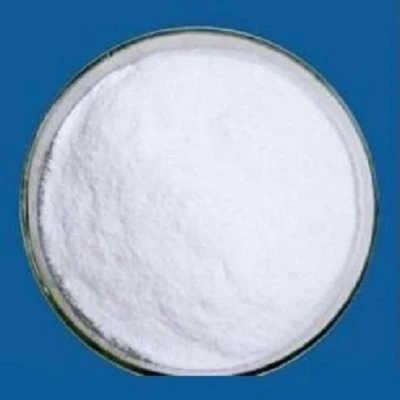
Pure acesulfame potassium is a high-intensity, zero-calorie sweetener engineered for food and beverage formulations requiring clean, potent sweetness at precise inclusion levels. Supplied as a white to off-white crystalline powder, it is globally recognized under INS 950 / E950 and conforms to major international standards, including FCC, USP, and Ph. Eur. grades.
Technical Specifications
|
Quality Parameter |
Standard Specification |
Compliance / Test Method |
|
Product Name |
Acesulfame Potassium (Ace-K) |
Food Grade / FCC / USP / Ph. Eur. |
|
CAS Number |
55589-62-3 |
Standard Chemical Identification |
|
INS / E Number |
INS 950 / E950 |
FAO/WHO JECFA & EU Regulations |
|
Appearance |
White to off-white crystalline powder |
Visual Inspection |
|
Assay (Dry Basis) |
99.0% - 101.0% |
Titrimetric / HPLC Analysis |
|
Solubility |
Soluble in water (~270 g/L at 20°C) |
Aqueous Dissolution Test |
|
Loss on Drying |
Less than or equal to 1.0% |
Loss on Drying (105°C) |
|
pH (1% Aqueous Sol.) |
5.5 - 7.5 |
Potentiometric Determination |
|
Impurity Profile |
Meets specified limits |
High-Performance Liquid Chromatography (HPLC) |
|
Heavy Metals (as Pb) |
Less than or equal to 5 mg/kg |
Inductively Coupled Plasma (ICP-MS) |
|
Microbiological Control |
Total Plate Count <= 1000 CFU/g; Pathogens Negative |
Standard Microbiological Assays |
Key Applications & Formulation Performance
Beverage Systems: Suitable for sugar-free carbonated soft drinks, powdered mixes, ready-to-drink (RTD) teas, and sports drinks. Maintains stability across acidic pH ranges and high-temperature short-time (HTST) pasteurization processes.
Confectionery & Bakery Products: Ideal for chewing gums, hard candies, chocolate coatings, and baked goods. High thermal tolerance ensures sweetening capacity remains intact during high-heat processing.
Dairy & Dairy Alternatives: Integrates smoothly into flavored milks, yogurts, plant-based dairy alternatives, and frozen desserts without altering clean flavor delivery.
Sweetener Blends & Synergy: Frequently combined with Aspartame, Sucralose, or Stevia extracts. Demonstrates a strong synergistic effect that enhances the overall sweet taste profile, rounds out flavor onset, and masks unwanted lingering off-notes.
Controlled Manufacturing & Quality Assurance
Production Control Sequence: Raw Material Inspection - Process Control - Synthesis & Purification - Crystallization - Separation & Drying - Screening - Final QC Testing - Packaging
Incoming Raw Material Assurance: Chemical identity and purity verification of key synthesis inputs prior to batch production.
In-Process Precision Controls: Continuous monitoring of reaction temperature, crystallization rate, particle size distribution, and drying cycles.
Finished Product Release Testing: Every batch undergoes comprehensive testing covering assay percentage, physical characteristics, organic impurities, heavy metals, and microbiological metrics.
End-to-End Batch Traceability: Each drum is tagged with a unique batch number linked directly to production logs, raw material lot history, and release testing data.
Compliance, Packaging & Bulk Supply
Standard Documentation Package: Certificate of Analysis (COA) corresponding to the specific delivered batch, Safety Data Sheet (SDS) in GHS format, Technical Data Sheet (TDS), and Non-GMO / Allergen / Kosher / Halal Statements.
Packaging & Transport Options: Supplied in 25 kg fiber drums or heavy-duty corrugated cartons with PE food-grade inner liners. Shipped on standard stretch-wrapped pallets with corner protectors. Private labeling and customized net weight options are available upon request.
Procurement & Qualification Process
Qualification Workflow: Specification Matching - Sample Evaluation -COA Verification - Trial Order - Commercial Supply
Inquiry Checklist: To request samples or receive a formal B2B quotation, please provide:
- Target Product Grade & Specification Requirements (e.g., USP, FCC, E950)
- Intended Application Matrix (e.g., Beverage, Confectionery, Blend)
- Destination Market & Regulatory Jurisdiction (e.g., USA, EU, Asia-Pacific)
- Estimated Annual Volume & Initial Order Size
- Preferred Packaging Format & Delivery Schedule
FAQ
Q: What is the sweetness intensity of Acesulfame Potassium compared to sucrose?
A: Acesulfame K is approximately 200 times sweeter than sucrose (table sugar), providing a fast sweetness onset without adding calories.
Q: Why is Ace-K often blended with other high-intensity sweeteners?
A: When blended with sweeteners like Sucralose, Aspartame, or Stevia, Ace-K exhibits a taste synergy that creates a sweeter profile than the sum of its parts while masking potential lingering off-tastes.
Q: How stable is Acesulfame Potassium during thermal processing and high-acid formulations?
A: Ace-K maintains its sweetening property across a wide pH spectrum (pH 3.0 to 9.0) and withstands high temperatures, making it fully stable during baking, UHT treatments, and HTST pasteurization.
Q: What certifications and compliance documents are provided with bulk orders?
A: Bulk shipments include a batch-specific COA, SDS, TDS, Allergen Statement, Non-GMO Statement, and relevant Halal/Kosher certificates to support regulatory approval in your destination market.
Q: Can I request customized packaging or specific particle size requirements?
A: Yes, packaging options (including private labeling and custom net weights) and tailored mesh size/particle distribution specifications can be evaluated based on your production requirements.
Hot Tags: pure acesulfame potassium sweetener, China pure acesulfame potassium sweetener manufacturers, suppliers, factory